BLACKOUT POETRY COMPETITION RESULTS 2025
NZPS and Blackout Poetry Aotearoa held a fun Blackout Poetry Contest during October/November for young poets, 12-18 years. We had some great submissions and the judging was tough, but here are the results! We will also be featuring submissions on our Instagram page.
Young poets were given advertisements from the 1940s through to the 1970s that they could use to create their blackout poem. The ads reflected the concerns of youth in those decades.
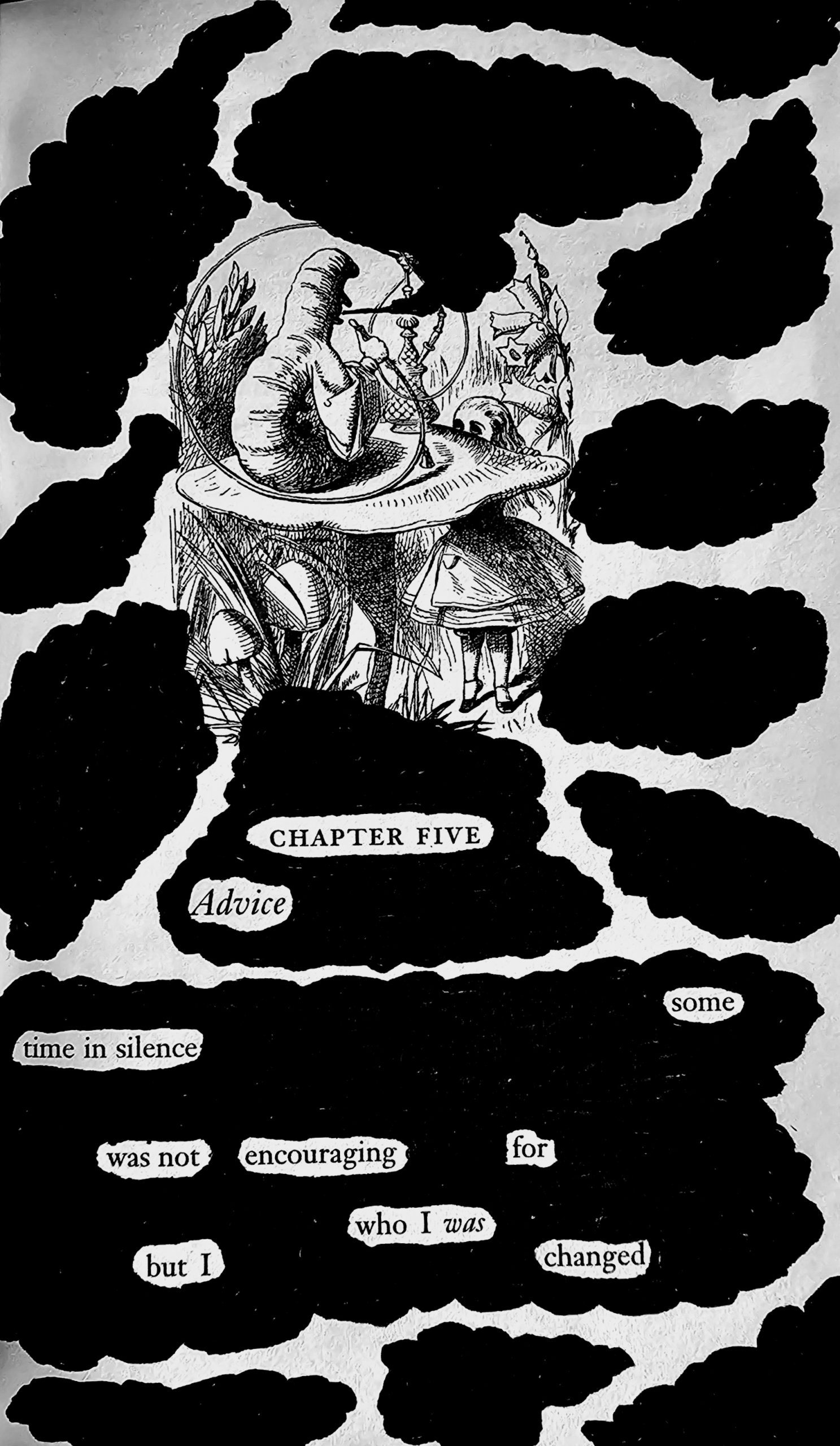
Blackout poem by Hebe Kearney.
JUDGE’S REPORT – HEBE KEARNEY
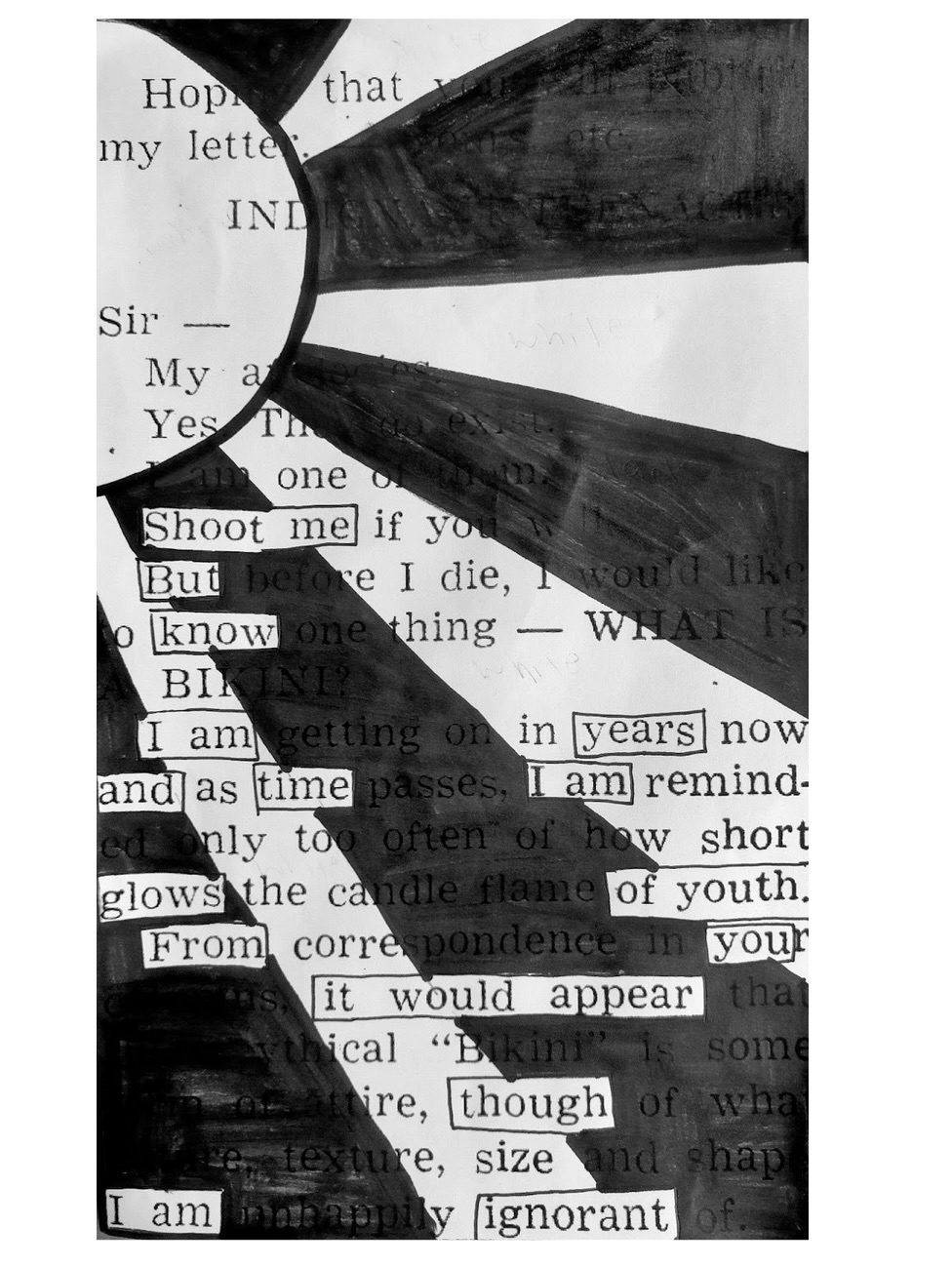
FIRST PLACE Victoria Manford – Hobson Point Primary School, Tāmaki Makaurau Auckland
After much deliberation, I selected this piece because of its harmony of form and text. The way the pattern emphasises the shape of the poem, and draws the reader’s eyes to its flows. I enjoy that the whole page isn’t covered, that attention is paid to punctuation and each selected word is clearly highlighted. I think the spiralling pattern communicates the sort of whirling thoughts this poem hints at – the confusion of being a ‘teenager’, and viewed through certain lenses.
To me, this poem seems to be in dialogue with the original text, which is an ongoing ‘letter to the editor’ argument about ‘bikinis’ from 1962, when said item was considered both a bit scandalous and symbolic of ‘teenage’ culture.
This piece erases this controversy, but still hints at it, claiming ‘i exist / one of them’, but feels confused about ‘this mythical Bikini form’ – which I read to mean all the expectations and judgements that have been laid upon teenagers as long as the designation has existed.
The poem also hints at the inherent irony of this ‘how short slows the / flame of youth’ – everyone who is outraged by teenage behaviour was once a teenager, and those causing outrage may later be outraged in turn.
How each word and pen stroke here feels necessary, and part of a united whole, makes this piece an excellent example of blackout poetry.

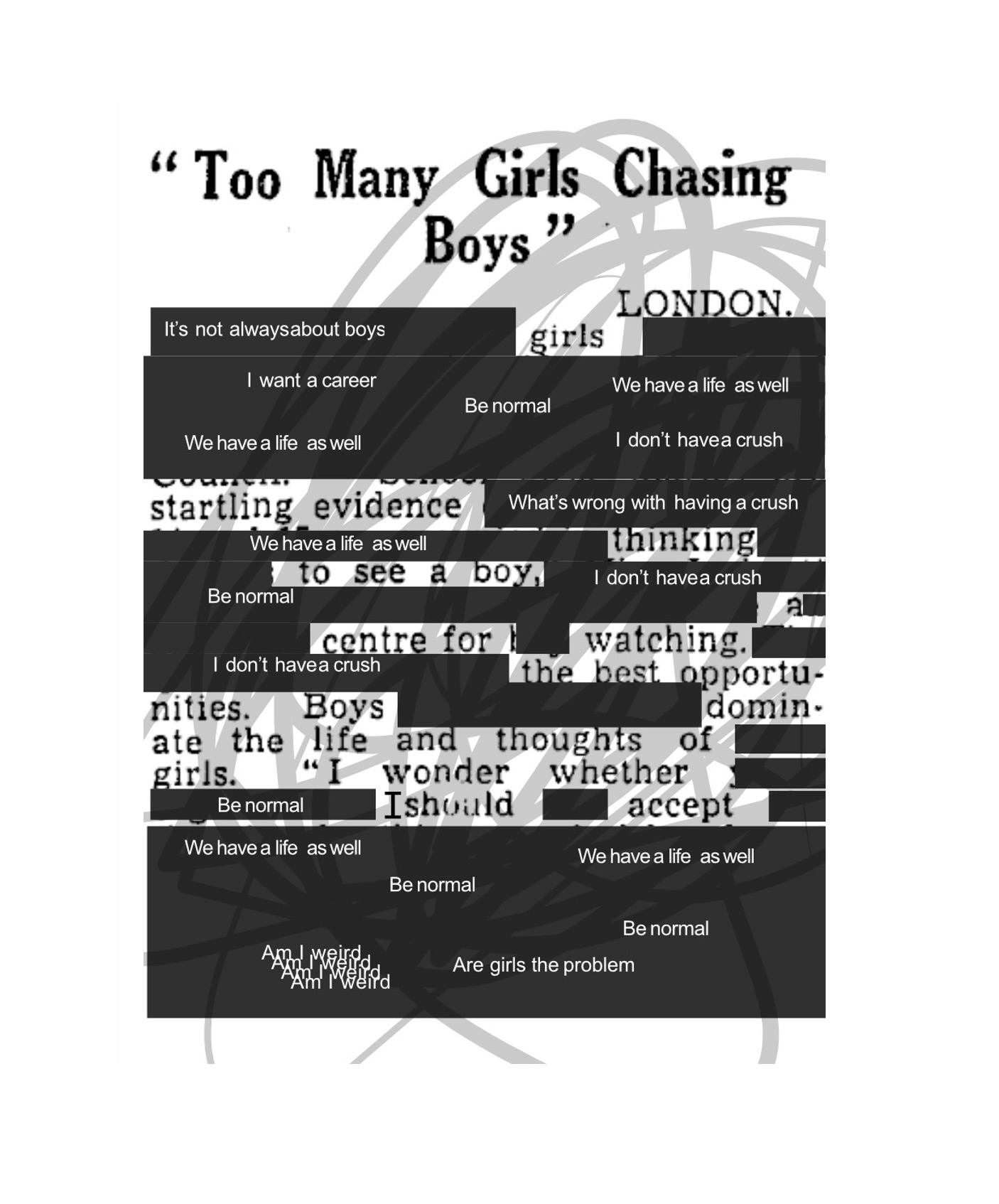
RUNNER-UP – Mishika Mehta
If I loved the last piece for its considered harmony, I love this one for its destruction. I really enjoy the aesthetic of the semi-transparent black rectangles, under which the words are erased, and the gyre-like grey swirl underneath. And trust me – this article is begging for such a treatment!
Originally, the text was quoting a 1950s ‘youth research worker’ observing that teenage girls seem to think about nothing but boys. She then goes on to add that perhaps this is not such a terrible thing, if this interest can be shaped into centring ‘avowed interests’ of marriage and children. Yikes!
I think this piece does a beautiful job of capturing how, while this sentiment may seem outdated now, it still represents very real pressures that teenage girls face. The added text focuses on having or not having a ‘crush’, as either could be met with derision. The repetition of ‘be normal’ and ‘am I weird’ demonstrate how thorny the issue is of trying to be accepted, when there are so many arbitrary and contradictory rules about how women and girls ‘should’ be.
This is a very powerful piece in its message and execution, and also a beautiful demonstration of how you can create great blackout poetry digitally just as well as with pen and paper!
THIRD PLACE Ella Pilkington – Huanui College, Whangārei
Interestingly, this piece was created using the same article as the first-place piece. Yet even though some of the same words are selected, this piece’s tone is quite different, as it seeks to reject the original article entirely.
This piece follows the bold opening ‘shoot me’ with ‘I am years / and I am time’. This fabulously poetic sentiment seems to inform those arguing about the morality of teenagers that they will soon be outlived, because time cannot be halted, even if individuals can. The selection of ‘ignorance’ here is to highlight this is a shallow opinion held of young people, who are ‘glows of youth’, and not ignorant at all.
The sun imagery works well, presumably representing ‘glows of youth’. Several other entries used the original text’s ‘candle flame of youth’ to influence the illustration, but I agree with the author that the sun is a more apt metaphor – the sun won’t stop burning anytime soon, and neither will awesome young people!